
Facility Room / Port Twin
One terminal. Ship to refinery, run as one machine.
This is a working concept twin of a representative Gulf Coast marine terminal, modeled the way xGRIDx models any facility: whole, in the open, with every system on one record. A container ship discharges to railcars and a truck that gates out. A products tanker offloads through the tank farm and down the pipeline to a connected refinery. Drones patrol the fence line and the stacks. A command center turns systems on and off and watches the pressures move. And the twin keeps score: every move metered, every idle minute priced, every optimization applied live.
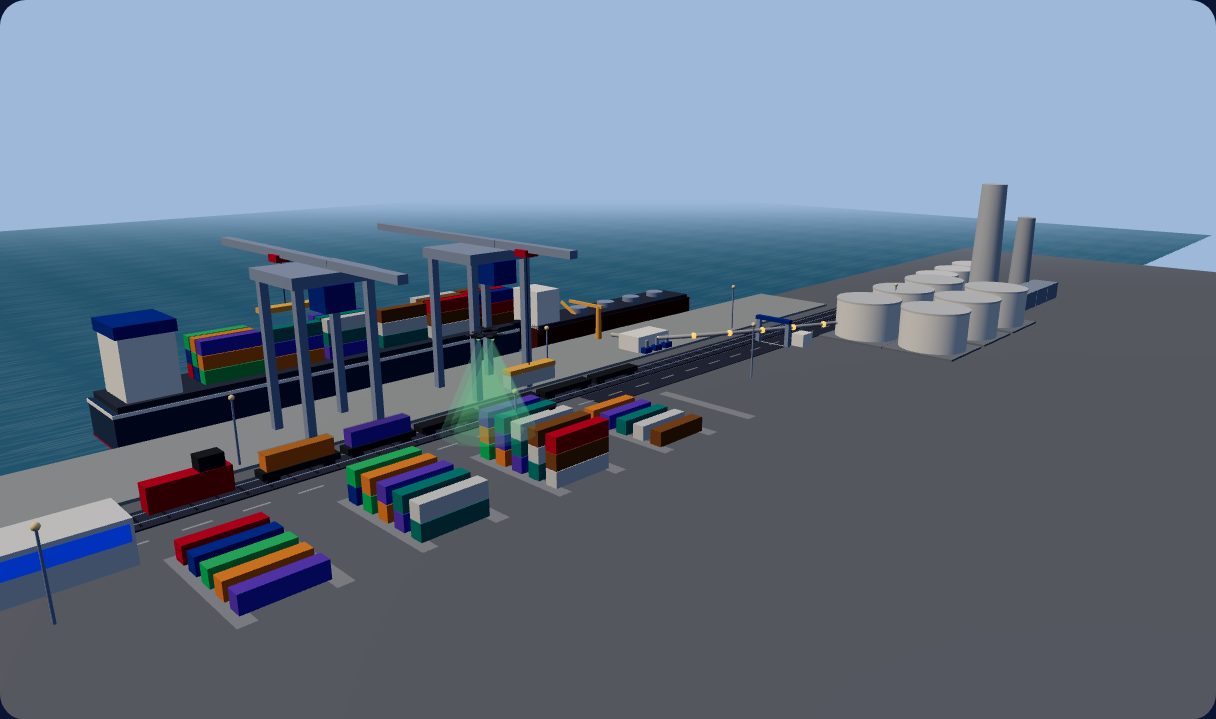
One continuous operation, live in the model: ship to crane to rail and truck, tanker to tank farm to refinery, drones overhead. Drag to orbit. Tap any component for its record.
Component
Drone hangar / Designed aircraft, flying the twin
Build it in the studio. Fly it here.
Every aircraft in this hangar is a design record from the Drone Designer, the first bench of the xGRIDx Machine Design Studio. Spawn a design and it joins the patrol as itself: its own frame, its own rotor count, and scan callouts that come from its own payload. A methane build reports methane, a thermal build reports heat, an inventory build counts the yard. The numbers on its card are the designer's estimates, carried into the twin unchanged.
Studio presets
Loading the studio presets…
Your designs
Import a design record
On patrol from the hangar
No designed aircraft flying yet. Spawn one above and it joins the watch.
Command center / The whole model, one panel
Run the terminal from here. The model answers.
Every switch below drives the twin above. Stop the transfer pumps and watch the line pressure fall off. Park the cranes and the move rate dies with them. This is what a watch floor sees when the facility and its record are the same thing.
Metering / The twin keeps score
Every move counted. Every idle minute priced.
The same state that animates the model meters it. Berth, cranes, yard, gate and line are read continuously, and the twin works the deltas: where time pools, where energy leaks, what a fix is worth before anyone spends on it. All values simulated, in time-lapse.
Optimization / Findings, priced before you act
Crane 2 waits on the rail cut
Re-sequencing Crane 2 to finish Bay 4 before the rail cut closes removes a standing wait in every cycle. The twin applies it to the live model: cycle speed up, dwell down 6 minutes, $11 per move.
Gate arrivals bunch at the hour
Appointment smoothing spreads drayage arrivals across the watch. Queue at the OCR portals clears, turn time falls from 38 to 24 minutes, worth $7 per move in the model.
Transfer pumps run flat out against a throttled line
The VFD trim the twin recommends holds line pressure at setpoint instead of fighting the control valve: energy per move down 5.2 kWh, $4 per move, no throughput cost.
TK-104 ullage on the current receipt
At the present transfer rate the tank reaches its high-level watch band inside this watch. The twin has already flagged the switch to TK-105 in the staff app below. No action needed here; that is the point of a watch.
Economics / What the score is worth
Costs walk down. Margin walks up. Same model.
These are demonstration numbers from a simulated terminal, shown so the shape of the accounting is visible: the twin does not report savings after the fact, it prices a change before the change is made, then keeps the receipt.
Watch started. Both berths working, UAV patrol airborne.
The staff app: the twin in a pocket. Tasks, seals, levels and alerts, signed at the event.
The watch / People run this
The model is tireless. The team is the point.
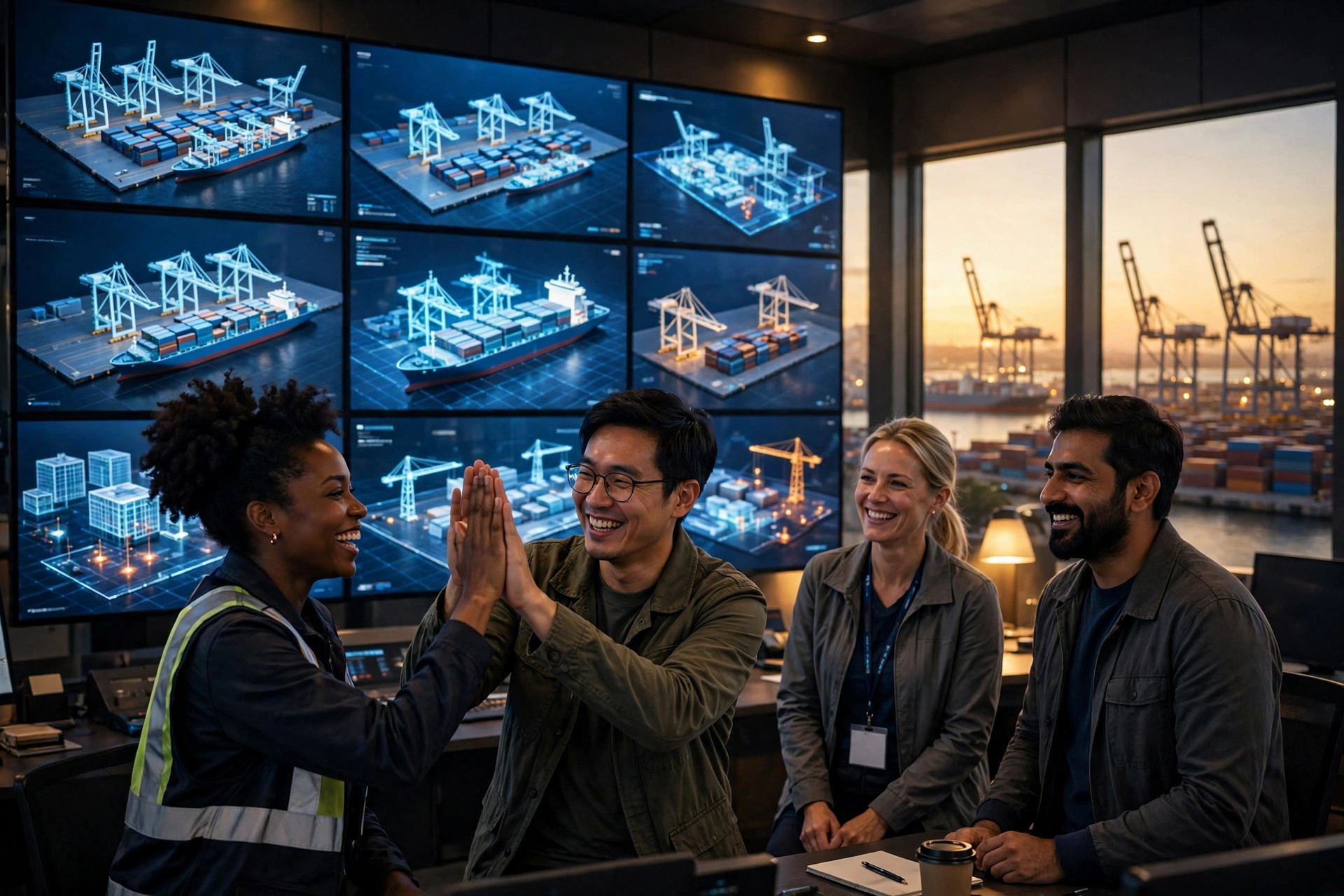
A twin earns its keep in moments like this one: the watch that cleared a vessel early, beat the tide window, and knew it before the radios did. Planners, crane operators, marine coordinators, inspectors and the twin operators who keep the record honest: men and women who run terminals, backed by a model that never sleeps and never guesses quietly.
The offer / Port terminals, twinned whole
Your terminal, modeled the way this one is. Then run from it.
xGRIDx builds the twin from capture and records, connects the systems that already meter your berths, cranes, gates and lines, and keeps the model current under a Managed Operations watch. A pilot is one berth and one tank farm, six to twelve weeks, one link your whole team can open. This page is a concept demonstration with simulated data; a pilot twin is built from your facility and your numbers.